| Exam Name: | Financial Strategy | ||
| Exam Code: | F3 Dumps | ||
| Vendor: | CIMA | Certification: | CIMA Strategic |
| Questions: | 393 Q&A's | Shared By: | ashley |
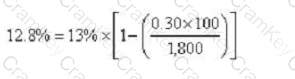
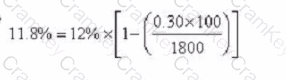
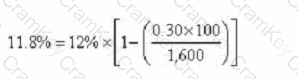
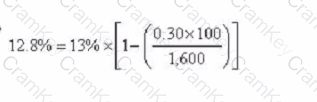
Company M is a geared company whose equity has a market value of $1,500 million and debt has a market value of S300 million. The company plans to issue $200 million of new shares and use the funds raised to pay off some of the debt
Company M currently has a cost of equity of 13% and a WACC of 10% It pays corporate tax at the rate of 30% Company B, an ungeared company operating in the same business sector as Company M, has a cost of equity of 12%
Assume Modigliani and Miller's theory of capital structure with tax applies
Which calculation below shows the correct approach to calculating the new WACC following the planned changes in capital structure?
A
B
C
D
A national rail operating company has made an offer to acquire a smaller competitor.
Which of the following pieces of information would be of most concern to the competition authorities?
A company generates and distributes electricity and gas to households and businesses.
Forecast results for the next financial year are as follows:

The Industry Regulator has announced a new price cap of $2.00 per Kilowatt.
The company expects this to cause consumption to rise by 15% but costs would remained unaltered.
The price cap is expected to cause the company's net profit to fall to:
F Co. is a large private company, the founder holds 60% of the company's share capital and her 2 children each hold 20% of the share capital.
The company requires a large amount of long-term finance to pursue expansion opportunities, the finance is required within the next 3 months. The family has agreed that an Initial Public Offering (IPO) should not be pursued at this time, because it would take up to 12 months to arrange.
The existing shareholders are currently considering raising the required finance from an established Venture Capitalist in the form of debt and equity. The Venture Capitalist has agreed to provide the required finance provided it can earn a return on investment of 25% per year. In addition, the Venture Capitalist requires 60% of the equity capital, a directorship in the company and a veto on all expenditure of a capital or revenue nature above a specified limit.
From the perspective of the family, which of the following are advantages of raising the required finance from the Venture Capitalist?
Select all that apply.

TESTED 14 Sep 2026

