| Exam Name: | PECB Certified ISO/IEC 27001 2022 Lead Auditor exam | ||
| Exam Code: | ISO-IEC-27001-Lead-Auditor Dumps | ||
| Vendor: | PECB | Certification: | ISO 27001 |
| Questions: | 418 Q&A's | Shared By: | obie |
Scenario 2:
Clinic, founded in the 1990s, is a medical device company that specializes in treatments for heart-related conditions and complex surgical interventions. Based in Europe, it serves both patients and healthcare professionals. Clinic collects patient data to tailor treatments, monitor outcomes, and improve device functionality. To enhance data security and build trust, Clinic is implementing an information security management system (ISMS) based on ISO/IEC 27001. This initiative demonstrates Clinic's commitment to securely managing sensitive patient information and proprietary technologies.
Clinic established the scope of its ISMS by solely considering internal issues, interfaces, dependencies between internal and outsourced activities, and the expectations of interested parties. This scope was carefully documented and made accessible. In defining its ISMS, Clinic chose to focus specifically on key processes within critical departments such as Research and Development, Patient Data Management, and Customer Support.
Despite initial challenges, Clinic remained committed to its ISMS implementation, tailoring security controls to its unique needs. The project team excluded certain Annex A controls from ISO/IEC 27001 while incorporating additional sector-specific controls to enhance security. The team evaluated the applicability of these controls against internal and external factors, culminating in the development of a comprehensive Statement of Applicability (SoA) detailing the rationale behind control selection and implementation.
As preparations for certification progressed, Brian, appointed as the team leader, adopted a self-directed risk assessment methodology to identify and evaluate the company’s strategic issues and security practices. This proactive approach ensured that Clinic’s risk assessment aligned with its objectives and mission.
Question:
According to Scenario 2, was the scope of Clinic’s ISMS determined correctly?
Scenario 6
Sinvestment is an insurance provider that offers a wide range of coverage options, including home, commercial, and life insurance. Originally established in North California, the company has expanded its operations to other locations, including Europe and Africa. In addition to its growth, Sinvestment is committed to complying with laws and regulations applicable to its industry and preventing any information security incident. They have implemented an information security management system (ISMS) based on ISO/IEC 27001 and have applied for certification.
A team of auditors was assigned by the certification body to conduct the audit. After signing a confidentiality agreement with Sinvestment, they started the audit activities. For the activities of the stage 1 audit, it was decided that they would be performed on site, except the review of documented information, which took place remotely, as requested by Sinvestment.
The audit team started the stage 1 audit by reviewing the documentation required, including the declaration of the ISMS scope, information security policies, and internal audit reports. The evaluation of the documented information was based on the content and procedure for managing the documented information.
In addition, the auditors found out that the documentation related to information security training and awareness programs was incomplete and lacked essential details. When asked, Sinvestment’s top management stated that the company has provided information security training sessions to all employees.
The stage 2 audit was conducted three weeks after the stage 1 audit. The audit team observed that the marketing department (not included in the audit scope) had no procedures to control employees’ access rights. Since controlling employees' access rights is one of the ISO/IEC 27001 requirements and was included in the company's information security policy, the issue was included in the audit report.
Question
According to Scenario 6, was it appropriate for the audit team to include in the audit report the observed deficiency in the marketing department's access rights control procedures?
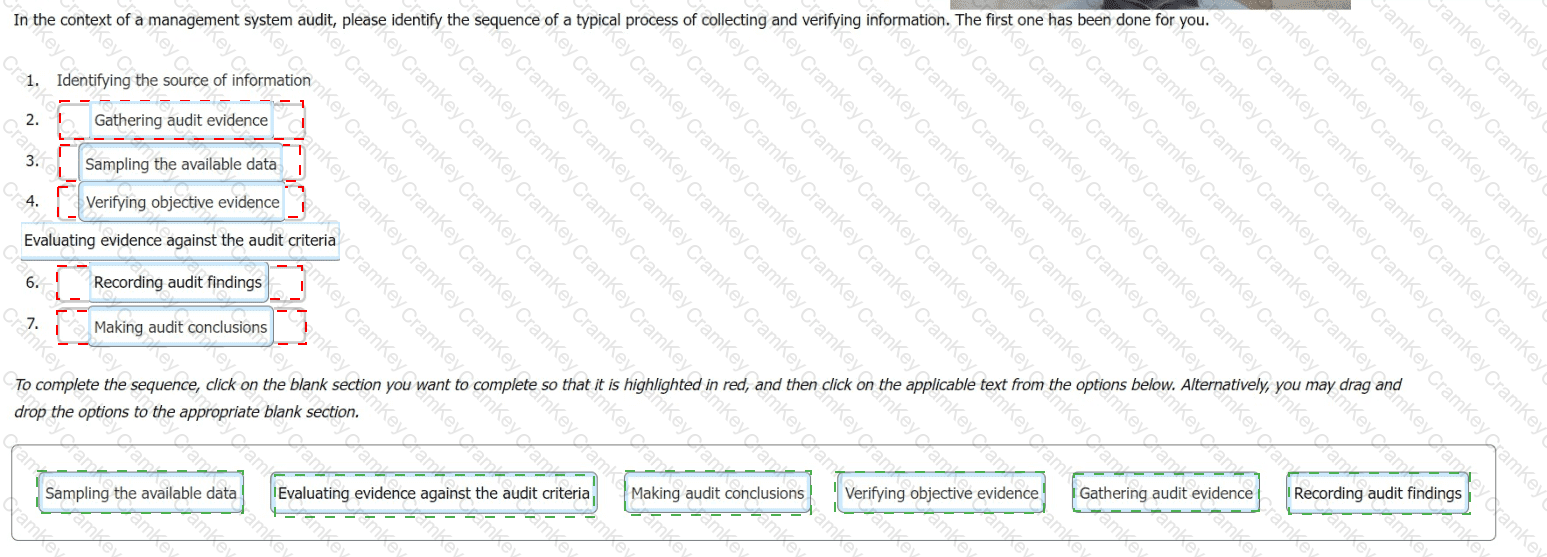
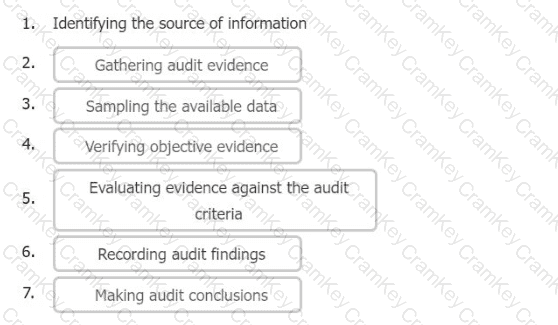
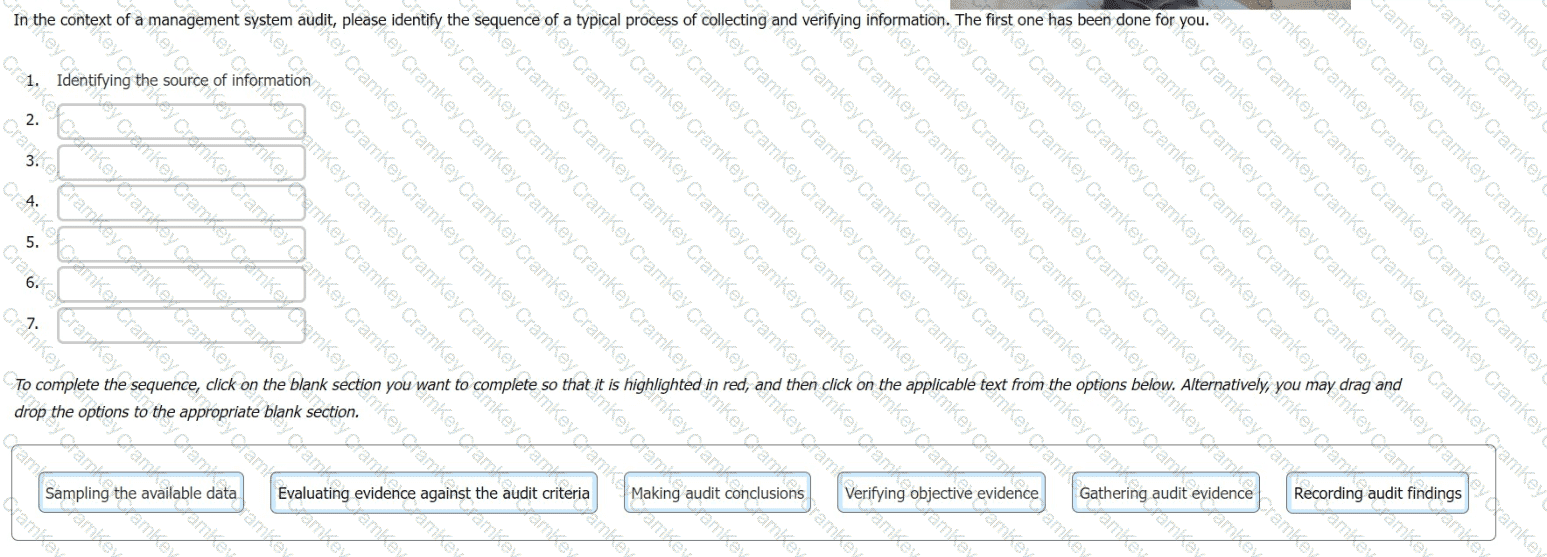
In the context of a management system audit, please identify the sequence of a typical process of collecting and verifying information. The first one has been done for you.
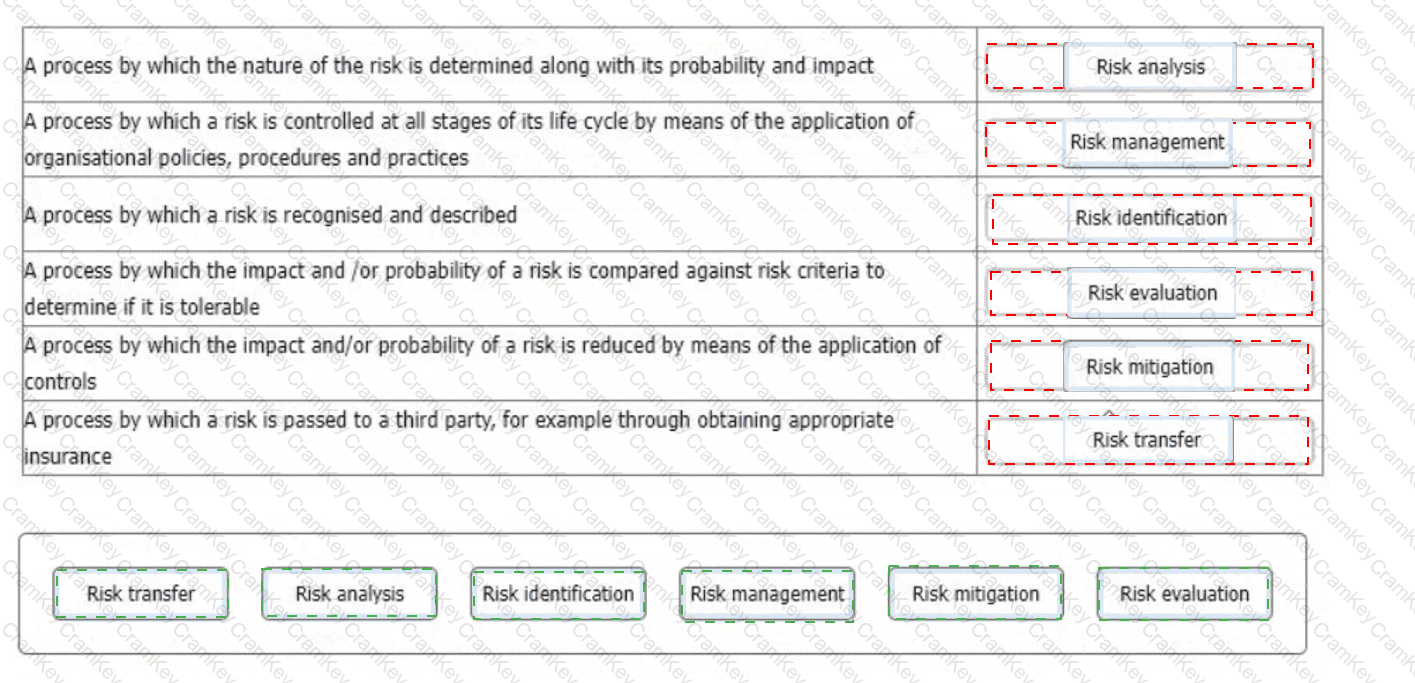
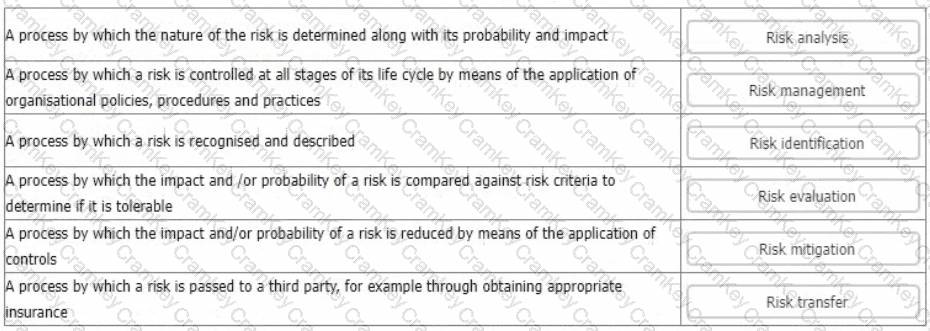
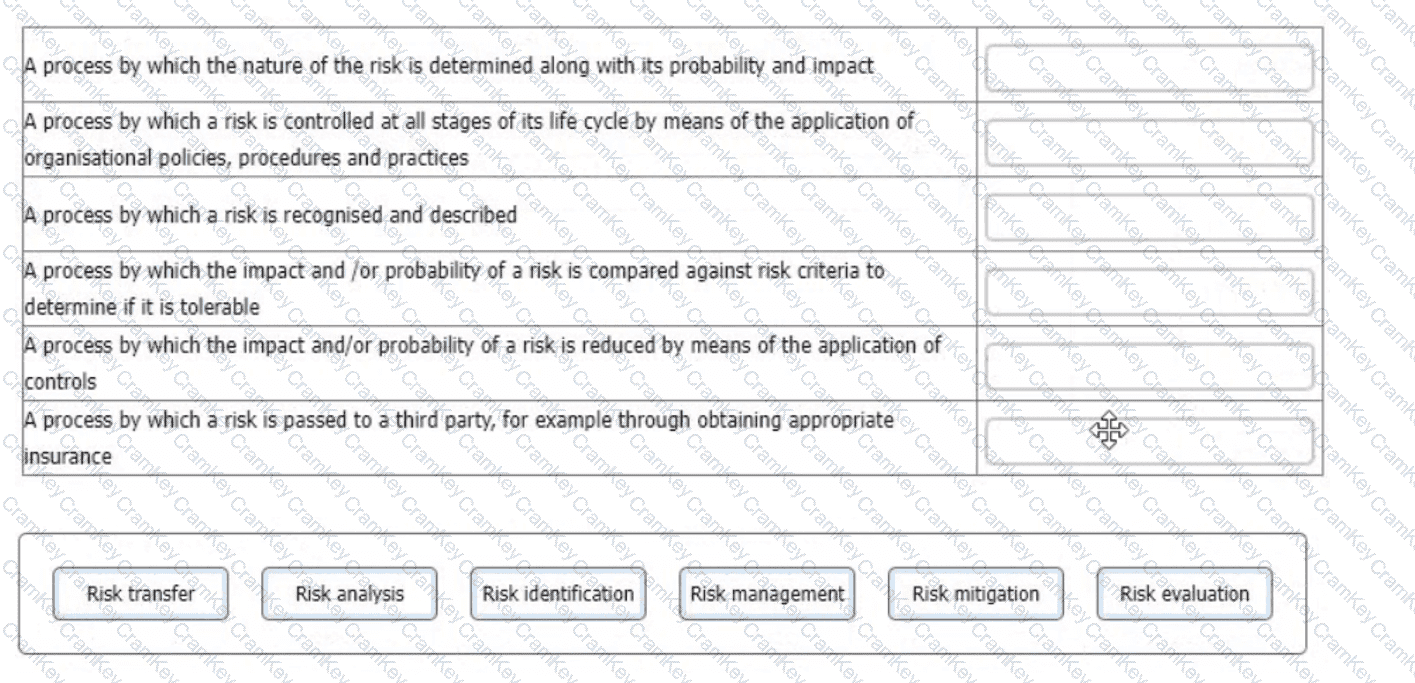
You are an experienced ISMS audit team leader providing instruction to an auditor in training. They are unclear in their understanding of risk processes and ask you to provide them with an example of each of the processes detailed below.
Match each of the descriptions provided to one of the following risk management processes.
To complete the table click on the blank section you want to complete so that it is highlighted in red, and then click on the applicable text from the options below. Alternatively, you may drag and drop each option to the appropriate blank section.

TESTED 13 Sep 2026