In the PMBOK® Guide, Project Risk Management includes the processes required to conduct risk management planning, identification, analysis, response planning, response implementation, and monitoring on a project.
Why Choice B is correct (Identify Risks): This is the process of determining which risks may affect the project and documenting their characteristics. It is an iterative process because new risks may evolve or become known as the project progresses through its life cycle.
Why Choice D is correct (Perform Qualitative Risk Analysis): Once risks are identified, they must be prioritized. This process assesses the probability and impact of each risk to determine which ones require the most attention. It typically uses a Probability and Impact Matrix to rank risks as high, medium, or low.
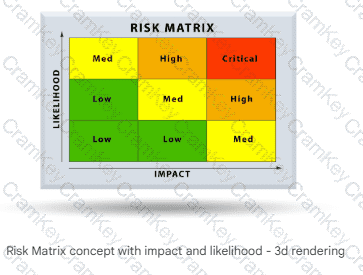
Why Choice C is correct (Plan Risk Responses): After prioritizing risks, the team develops options and actions to enhance opportunities and reduce threats. Common strategies for threats include Avoid, Transfer, Mitigate, or Accept, while strategies for opportunities include Exploit, Share, Enhance, or Accept.
Analysis of other options:
A (Monitor Risk Costs): While costs are monitored in the Control Costs process, there is no specific process named " Monitor Risk Costs " in the Risk Management knowledge area. The correct process for oversight is Monitor Risks, which tracks the status of risks and the effectiveness of responses.
E (Estimate Risk Activity Resources): This is not a standard process. Resource estimation occurs in Project Resource Management (Estimate Activity Resources). While risk responses require resources, the estimation of those resources is integrated into the broader resource and schedule management plans, not as a standalone risk process.
Key Concept: The Project Management Institute (PMI) emphasizes that Risk Management is proactive. By Identifying Risks (Choice B), Analyzing them Qualitatively (Choice D), and Planning Responses (Choice C), a project manager reduces the likelihood of " firefighting " and increases the probability of project success by preparing for uncertainty before it occurs.