| Exam Name: | HCIP-Datacom-Advanced Routing & Switching Technology V1.0 | ||
| Exam Code: | H12-831_V1.0 Dumps | ||
| Vendor: | Huawei | Certification: | HCIP-Datacom |
| Questions: | 244 Q&A's | Shared By: | noel |
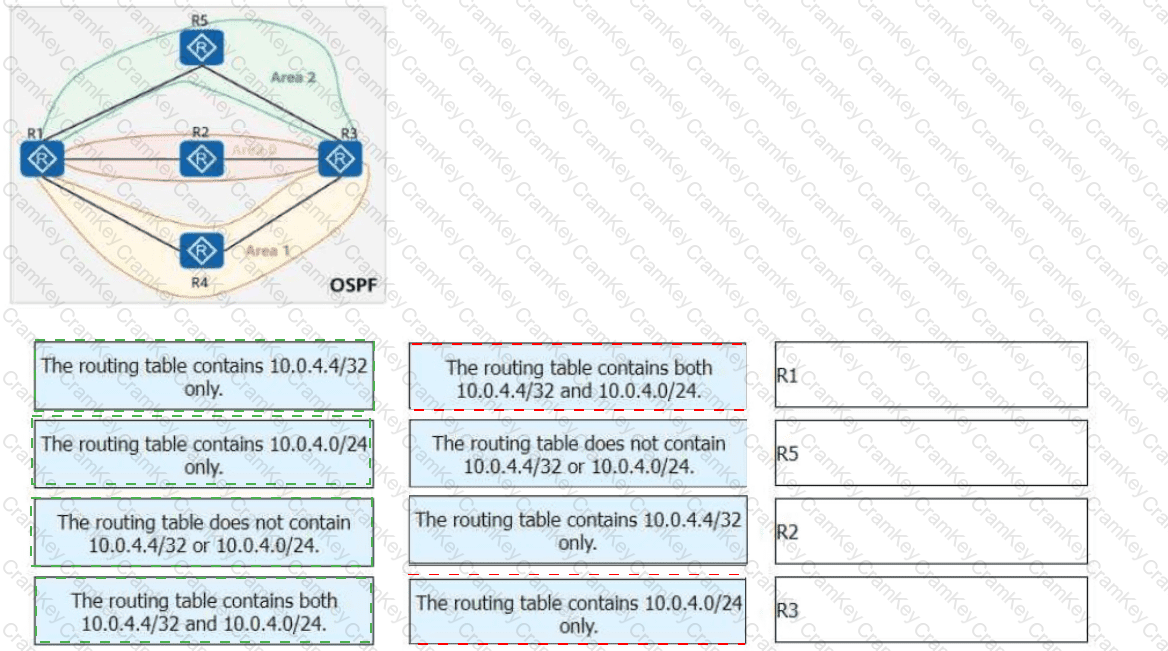
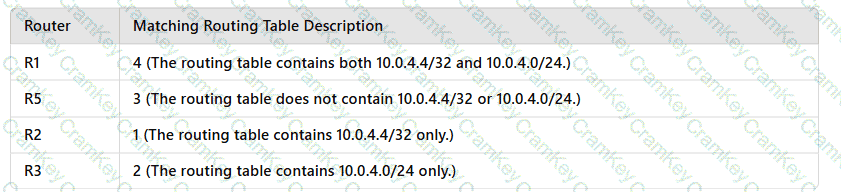
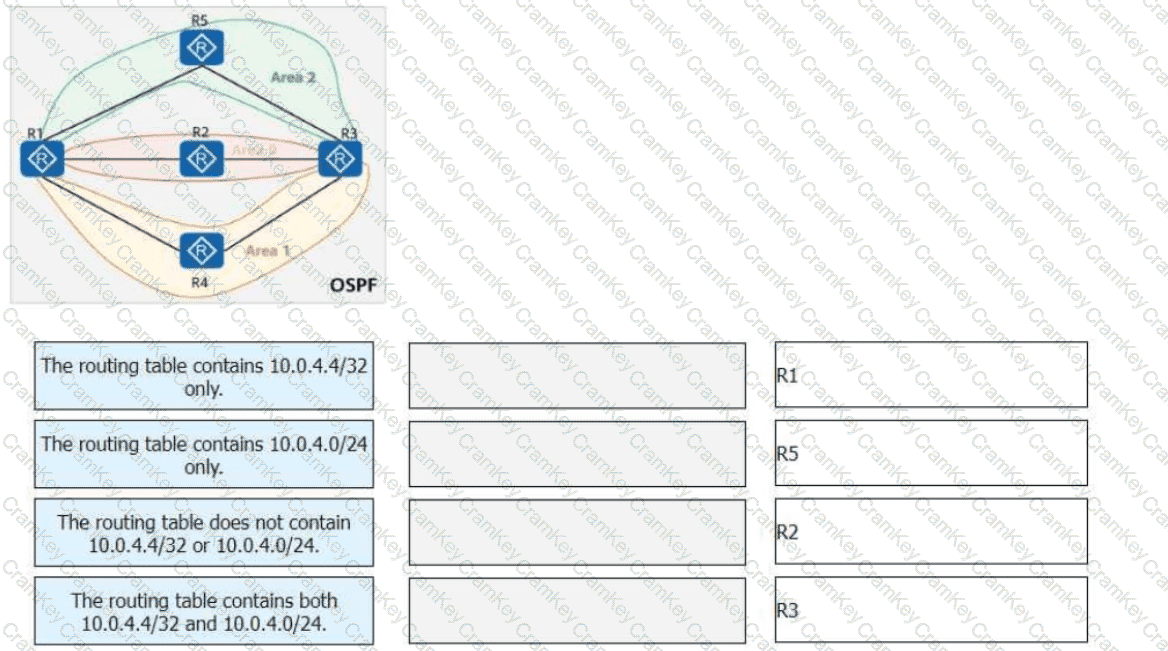
On the OSPF network shown in the figure, area 1 is an NSSA, area 2 is a stub area, and R4 imports an external route 10.0.4.4/32. The router ID of each router is 10.0.X.X, where X is the router number. The asbr-summary 10.0.4.0 255.255.255.0 command is configured in the OSPF processes of R1 and R3.
Match the following descriptions of routing tables with the corresponding routers:
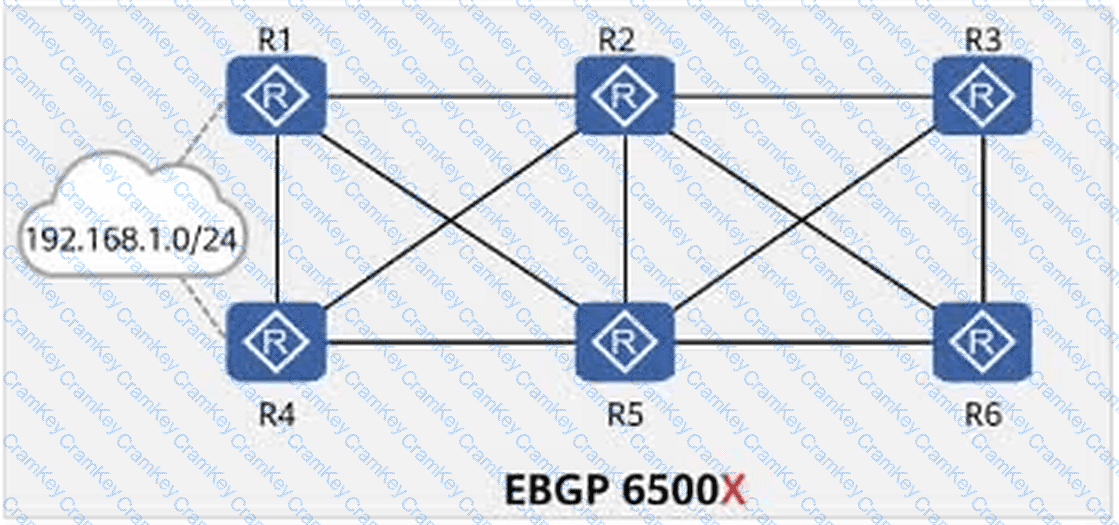
On the network shown in the figure, EBGP peer relationships are established between neighboring routers through directly connected interfaces. The AS number is 6500X, where X is the number of the router. Both R1 and R4 have static routes to 192.168.1.0/24, which are imported to BGP through the import-route command. The maximum number of equal-cost EBGP routes for load balancing is set to 8 on R3. By default, which of the following is the number of equal-cost routes from R3 to 192.168.1.0/24?
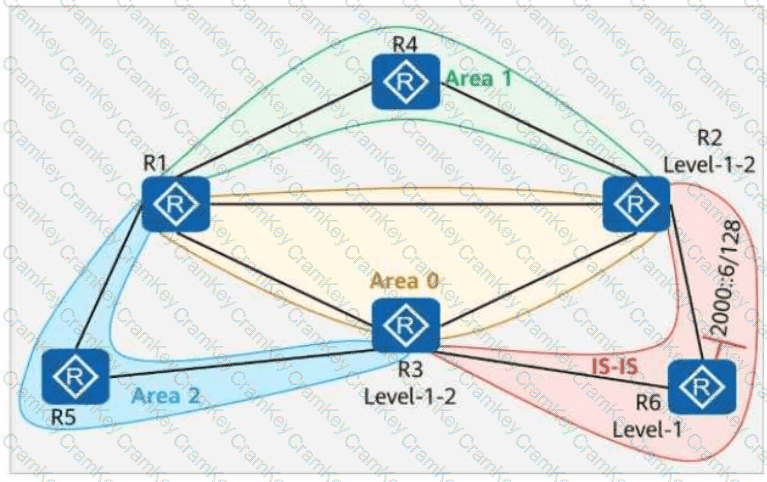
On the network shown in the figure, IS-IS IPv6 runs on R2, R6, and R3, and the IPv6 address of Loopback0 on R6 is 2000::6/128. OSPFv3 runs on other links. Area 1 is a stub area, and Area 2 is an NSSA. IS-IS routes are imported to OSPFv3 on R2 and R3. Which of the following statements are true?
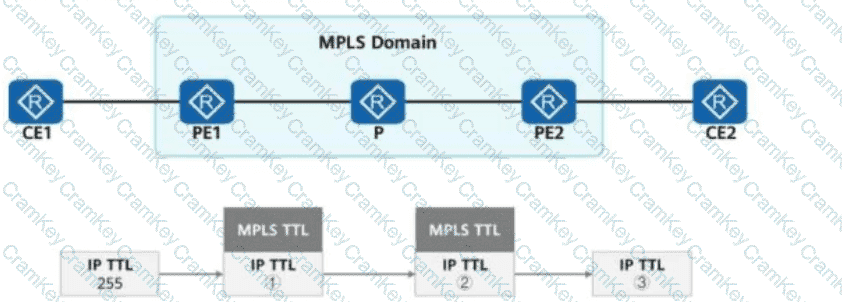
When an IP packet passes through an MPLS network, an MPLS device processes the TTL value in the packet.
If the pipe mode is used in the topology shown in the figure, which of the following is the TTL value in the IP packet?
Options:

TESTED 21 Nov 2026