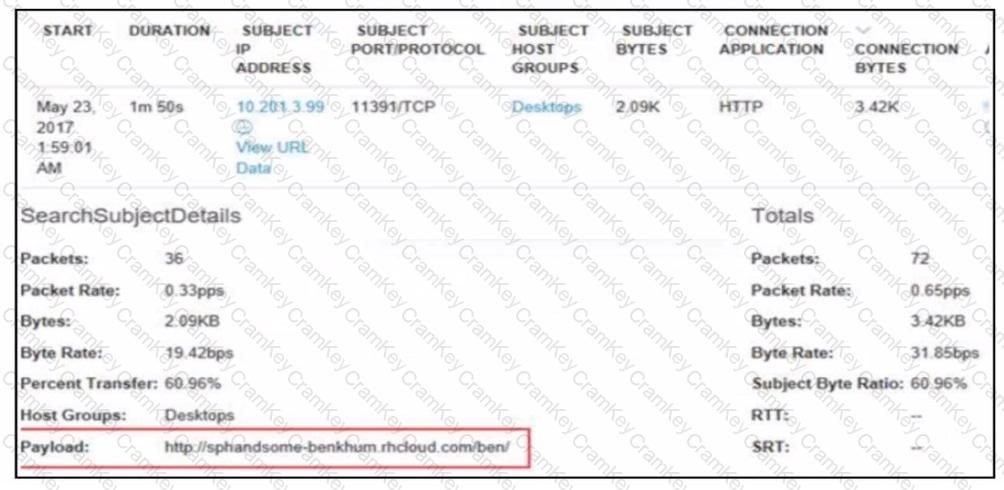
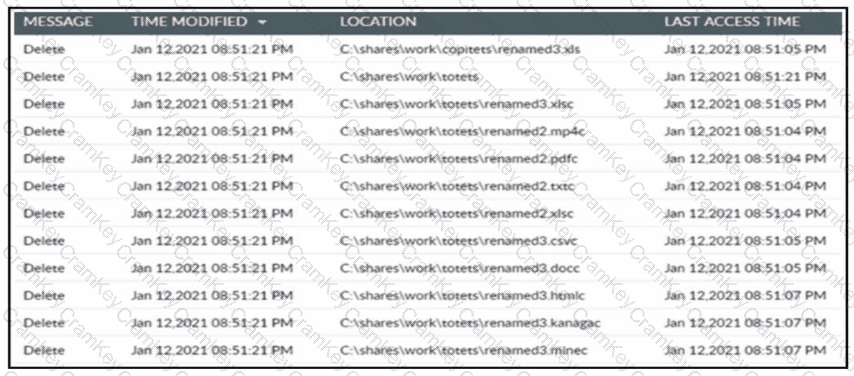
The correct answer isUnauthorized penetration test. Based on the scenario provided, there is no indication that the observed activity was planned, approved, or coordinated by the organization. Instead, the evidence points tomalicious, unauthorized accessusing a valid user account, followed by destructive actions on the file server.
The exhibit showsmultiple file deletions and modificationsoccurring within a very short time window after asuccessful remote sign-in. From a professional SOC and threat hunting perspective, this sequence strongly suggestsaccount compromisefollowed byintentional malicious activity, such as data destruction, ransomware staging, or anti-forensics behavior. Intrusion Prevention System alerts further reinforce that the activity violated security policies, which would not be the case during a sanctioned test.
Option A (White box penetration test) and Option D (Black box penetration test) both describetesting methodologies, not threat types. White box testing is conducted with full internal knowledge and explicit authorization, while black box testing is performed with limited knowledge but still under a formal, approved engagement. In both cases, SOC teams are typically informed ahead of time to prevent unnecessary incident escalation.
Option B (Authorized penetration test) is also incorrect because authorized tests are documented, scoped, and approved by management. They do not involve real user account compromise without prior notification, nor do they trigger IPS alerts treated as genuine incidents.
In contrast,unauthorized penetration testingrefers to real-world attacker behavior where an adversary attempts to compromise systems without permission. Even if the attacker’s techniques resemble penetration testing tools or methods, the lack of authorization makes it a true security incident.
From a threat hunting and incident response standpoint, this classification is critical. Treating unauthorized activity as a live threat ensures proper containment actions, such as account disabling, credential resets, forensic preservation, and scope expansion. Misclassifying such activity as a test could lead to delayed response and increased damage.
In short,authorization—not technique—determines intent. Since no authorization exists in this scenario, the activity represents anunauthorized penetration attempt, making optionCthe correct answer.