HPE Network Security Expert Written Exam
Last Update Nov 16, 2026
Total Questions : 75
To help you prepare for the HPE7-A10 HP exam, we are offering free HPE7-A10 HP exam questions. All you need to do is sign up, provide your details, and prepare with the free HPE7-A10 practice questions. Once you have done that, you will have access to the entire pool of HPE Network Security Expert Written Exam HPE7-A10 test questions which will help you better prepare for the exam. Additionally, you can also find a range of HPE Network Security Expert Written Exam resources online to help you better understand the topics covered on the exam, such as HPE Network Security Expert Written Exam HPE7-A10 video tutorials, blogs, study guides, and more. Additionally, you can also practice with realistic HP HPE7-A10 exam simulations and get feedback on your progress. Finally, you can also share your progress with friends and family and get encouragement and support from them.
Introduction to the customer
You are assisting a company with adding HPE Aruba Networking ClearPass to its network, which uses HPE Aruba Networking network-infrastructure devices.
The company already has a Windows domain and Windows CA. The Windows CA issues certificates to domain computers, domain users, and servers such as domain controllers.

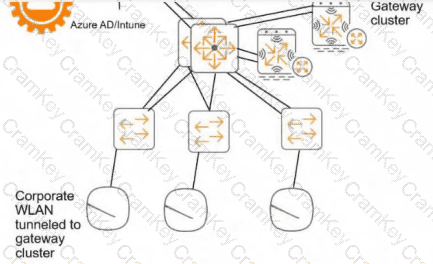
ClearPass cluster IP addressing and hostnames
Publisher = 10.47.47.5
Subscriber 1 = 10.47.47.6
Subscriber 2 = 10.47.47.7
Virtual IP with Subscriber 1 and Subscriber 2 = 10.47.47.8
Refer to the scenario.
You imported the root certificate for the Windows CA into the ClearPass CA Trust list. Based on the scenario requirements, which usages should be added to it?
Introduction to the customer
You are assisting a company with adding HPE Aruba Networking ClearPass to its network, which uses HPE Aruba Networking network-infrastructure devices.
The company already has a Windows domain and Windows CA. The Windows CA issues certificates to domain computers, domain users, and servers such as domain controllers.
ClearPass cluster IP addressing and hostnames
Publisher = 10.47.47.5
Subscriber 1 = 10.47.47.6
Subscriber 2 = 10.47.47.7
Virtual IP with Subscriber 1 and Subscriber 2 = 10.47.47.8
Refer to the scenario.
Assume that you configured CPPM to assign HPE Aruba Networking ClearPass roles and AOS user roles as indicated in the scenario. However, a penetration tester was able to access the network with medical-staff privileges on a client with a valid computer certificate but a revoked medical user certificate. In this situation, the customer wants the client to receive computer-only access.
What can you do to resolve this issue while continuing to meet the other customer requirements?

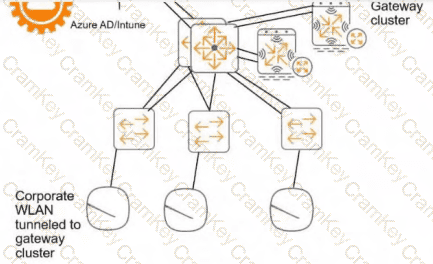
A customer uses an AOS-10 architecture managed by HPE Aruba Networking Central. HPE Aruba Networking infrastructure devices authenticate clients against an HPE Aruba Networking ClearPass cluster.
In HPE Aruba Networking Central, you examine network traffic flows for a wireless IoT device categorized as a "Raspberry Pi" client. You observe SSH traffic. After checking several additional wireless IoT clients, you find that they are also sending SSH traffic.
Refer to the scenario.
You need an easy way to communicate to HPE Aruba Networking ClearPass Policy Manager (CPPM) that an IoT client has used SSH.
What step should you take?
A customer has an AOS-10 architecture managed by HPE Aruba Networking Central. HPE Aruba Networking infrastructure devices authenticate clients against an HPE Aruba Networking ClearPass cluster.
In HPE Aruba Networking Central, you are reviewing network traffic flows for a wireless IoT device categorized as "Raspberry Pi" clients. You observe SSH traffic. You then review several additional wireless IoT clients and find that they are also sending SSH.
Refer to the scenario.
You are assisting the customer in evaluating ways to mitigate the potential threat detected. The customer wants to temporarily block misbehaving clients for a penalty period. If a client reconnects and no longer sends SSH traffic, it should be permitted to stay connected.
What approach should you take?

TESTED 16 Nov 2026