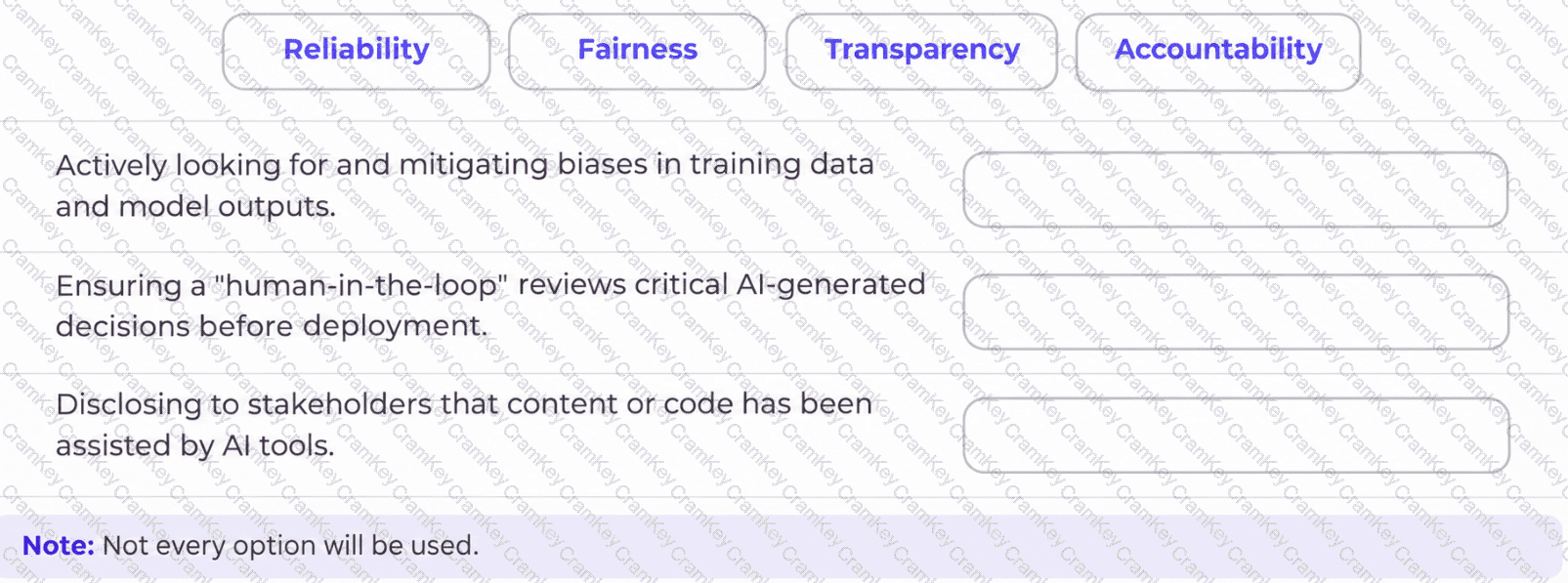
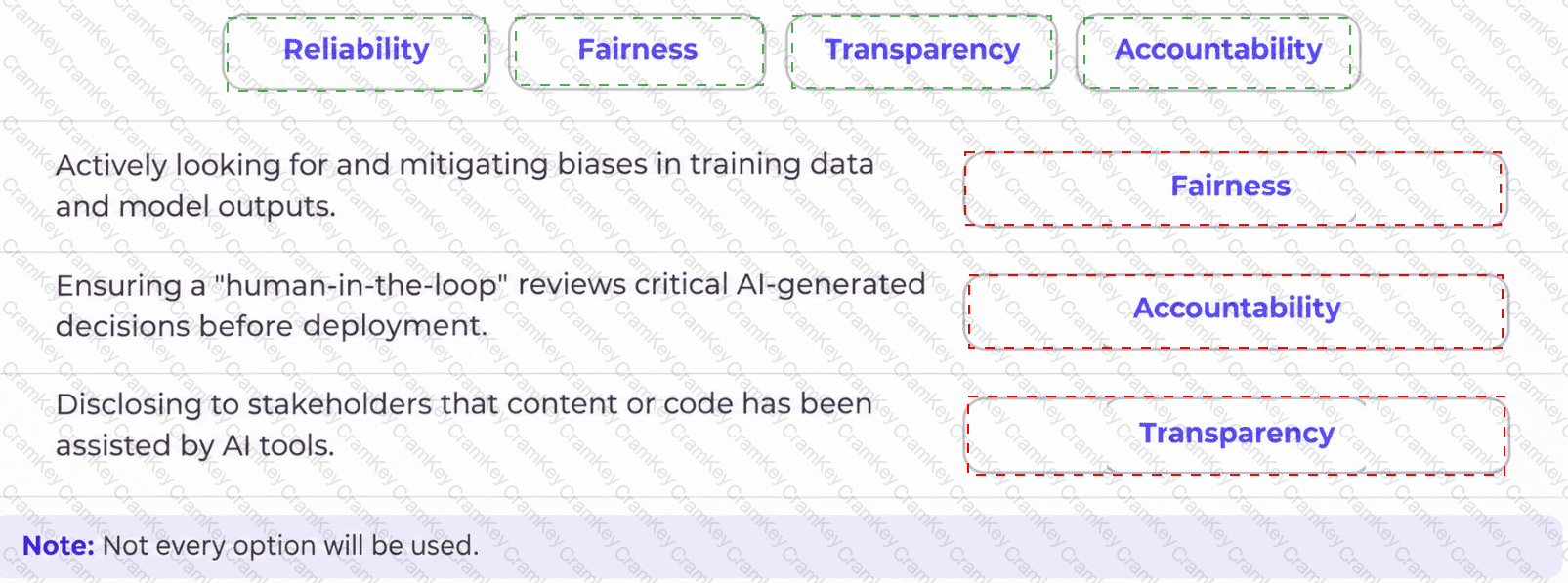
The requirements phase of the Software Development Lifecycle (SDLC) focuses on identifying, analyzing, documenting, and validating the functional and nonfunctional requirements of a software solution. Option A is correct because reviewing stakeholder documentation and generating structured user stories are fundamental requirements engineering activities.
Artificial intelligence can assist requirements analysts by processing business documents, meeting transcripts, project specifications, and stakeholder feedback to identify functional expectations and technical constraints.
For example, an AI assistant might analyze a stakeholder's request for a customer authentication system and generate user stories describing account registration, password recovery, multifactor authentication, and access control requirements.
AI can also identify ambiguous terminology, conflicting requirements, missing acceptance criteria, and dependencies between requested features.
Option B is incorrect because maintenance focuses on correcting defects, improving performance, and updating software after deployment.
Option C is incorrect because implementation involves translating approved designs and requirements into executable code.
Option D is incorrect because testing validates software behavior against requirements, although AI can also generate test cases from user stories.
AI-assisted requirements analysis improves documentation consistency, requirement traceability, and development readiness. Generated requirements nevertheless require stakeholder validation before implementation.
Specific Cisco AITECH Course Guide References:
AI-Driven Software Engineering
AI-Powered Discovery and Synthesis
Exam Objective 5.1: AI's role across the software development lifecycle
Cisco explicitly includes requirements analysis within its AI-assisted software development objectives.
===================