Enterprise Routing and Switching, Specialist (JNCIS-ENT)
Last Update Sep 30, 2026
Total Questions : 65
To help you prepare for the JN0-352 Juniper exam, we are offering free JN0-352 Juniper exam questions. All you need to do is sign up, provide your details, and prepare with the free JN0-352 practice questions. Once you have done that, you will have access to the entire pool of Enterprise Routing and Switching, Specialist (JNCIS-ENT) JN0-352 test questions which will help you better prepare for the exam. Additionally, you can also find a range of Enterprise Routing and Switching, Specialist (JNCIS-ENT) resources online to help you better understand the topics covered on the exam, such as Enterprise Routing and Switching, Specialist (JNCIS-ENT) JN0-352 video tutorials, blogs, study guides, and more. Additionally, you can also practice with realistic Juniper JN0-352 exam simulations and get feedback on your progress. Finally, you can also share your progress with friends and family and get encouragement and support from them.
You have configured a GRE tunnel from your local router with tunnel source 10.0.0.1 to a remote router at destination 192.168.0.1. The tunnel is functioning until you commit set routing-options static route 0.0.0.0/0 next-hop gr-0/0/0. This configuration causes the tunnel to go down.
Which statement is correct in this scenario?
[Exhibit]
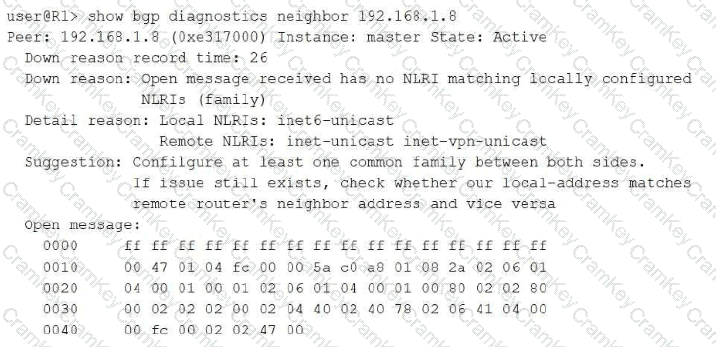
Click the Exhibit button.
You have two routers on your network that are not able to establish BGP sessions.
Which two statements are correct in this scenario? (Choose two.)
Refer to Exhibit:
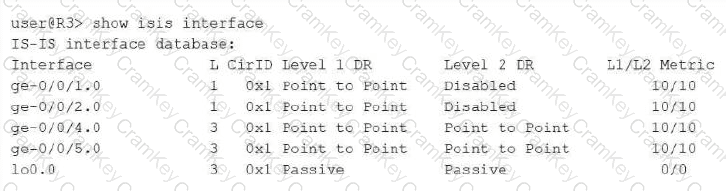
Click the Exhibit button.
Which two statements about the output shown in the exhibit are correct? (Choose two.)
Which sequence correctly describes the basic message flow that leads to a successful BGP peering session?

TESTED 30 Sep 2026